Advanced Therapies · Brain · rTMS

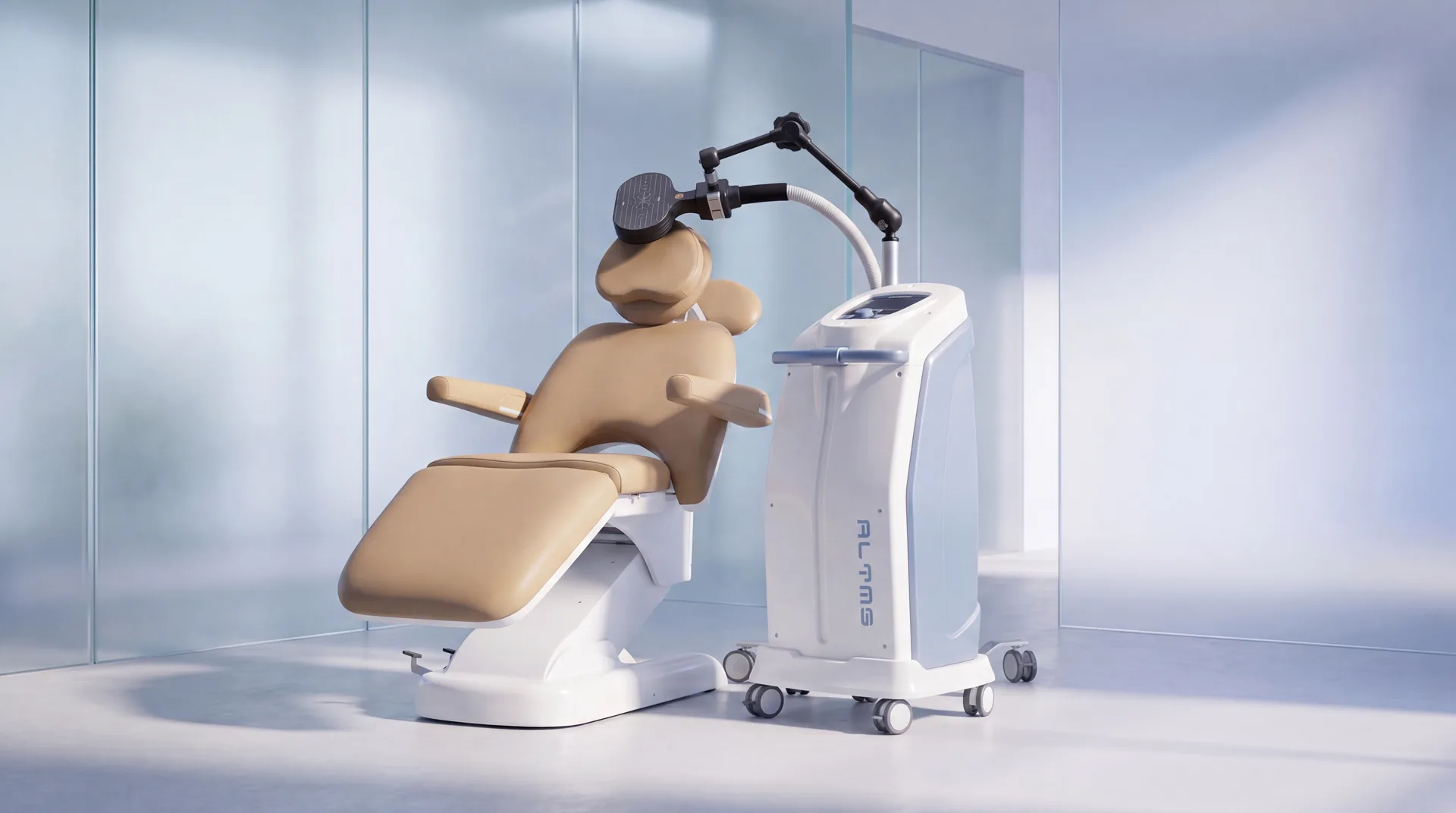
ALTMS / BLOSSOM TMS

FDA-cleared rTMS for depression. Drug-free, in-office, covered as a course of care.

An FDA 510(k) cleared repetitive transcranial magnetic stimulation (rTMS) system for Major Depressive Disorder. A non-invasive, non-systemic option for patients who have not responded to medication, delivered in-office as a reimbursable course of care.

New treatment line FDA 510(k) K220625 Class II Reimbursable: 90867 to 90869 MDD only (US)
K220625
FDA 510(k) cleared
Class II
21 CFR 882.5805
MDD only
US cleared indication
90867 to 90869
Reimbursable CPT course
REMED Co Ltd
Manufacturer
Clearance & Claims

Cleared in the US for depression. We market it for exactly that.

ALTMS / BLOSSOM TMS is FDA 510(k) cleared for Major Depressive Disorder. The international instructions for use list other indications. Those are not cleared in the United States, so TITN does not market them. The discipline is the point.

FDA 510(k) Clearance
REMED Co., Ltd. · Class II medical device
510(k) cleared
FDA 510(k) record
K220625 · ALTMS Magnetic Stimulation Therapy System / Blossom TMS Therapy System, REMED Co., Ltd. Cleared substantially equivalent on April 6, 2022. Product code OBP, regulation 21 CFR 882.5805, neurology panel. The FDA defines product code OBP as a transcranial magnetic stimulator for the treatment of major depressive disorder.
Search the FDA 510(k) database (K220625) →
US cleared indication
"Indicated for the treatment of Major Depressive Disorder in adult patients who have failed to achieve satisfactory improvement from prior antidepressant medication in the current episode."
Representative wording for the cleared MDD indication under product code OBP. Confirm the verbatim indication against the device's 510(k) summary before patient-facing publication.
How rTMS works
  • Repetitive TMS · a focused magnetic field induces small electrical currents in targeted cortical tissue
  • Non-invasive · no surgery, no anesthesia, no sedation
  • Non-systemic · no drug circulating through the body, so the side-effect profile differs from medication
Reimbursement
A course of care, payer-dependent, documented
Billed across a full course 90867 to 90869 Reimbursement is typical from EOB data and varies by payer, plan, and locality. A standard rTMS course runs across multiple sessions over several weeks.
Reimbursable CPT codes
  • 90867 · initial treatment, including cortical mapping, motor threshold determination, delivery, and management (once per course)
  • 90868 · subsequent delivery and management, per session (the bulk of the course)
  • 90869 · subsequent motor threshold re-determination with delivery and management, when re-mapping is required

Coverage typically requires documented MDD with failure of one or more adequate antidepressant trials in the current episode. Verify your locality with the CMS PFS Look-Up. Coverage and reimbursement vary by payer.

What TITN claims: ALTMS / BLOSSOM TMS is FDA-cleared rTMS for Major Depressive Disorder, delivered in-office as a non-invasive course of care, reimbursable under CPT 90867 to 90869 when documentation supports medical necessity. Reimbursement is typical from EOB data and varies by payer.
What TITN does not claim: The US clearance is for Major Depressive Disorder only. TITN does not market ALTMS / BLOSSOM TMS for epilepsy, OCD, Parkinson's disease, tinnitus, multiple sclerosis, panic disorder, or hallucinations, even though some of these appear in the manufacturer's international (Korean) instructions for use. Those indications are not FDA-cleared in the United States. ALTMS is a therapy, not a diagnostic; it does not diagnose any condition.
Clinical Use

Where rTMS fits in a depression-care pathway.

ALTMS / BLOSSOM TMS is built around the MDD patient who is still searching for relief. Each use below sits inside your clinical judgment, with the cleared indication held firmly in view.

Medication-resistant MDD

For adults with Major Depressive Disorder who have not achieved satisfactory improvement from prior antidepressant medication in the current episode. The cleared, on-label use.

Drug-free or drug-sparing

A non-systemic option for patients who cannot tolerate antidepressant side effects, or who want to avoid adding another medication. Discussed and documented per your protocol.

In-office course of care

Delivered in your practice across a multi-week course, no inpatient stay. Billed per session under the rTMS CPT family, keeping revenue and the patient relationship in-house.

Documented response tracking

Pair the course with standardized depression scales and, where indicated, a WAVi brain baseline and retest to document objective change over the treatment window.

Medication-metabolism context

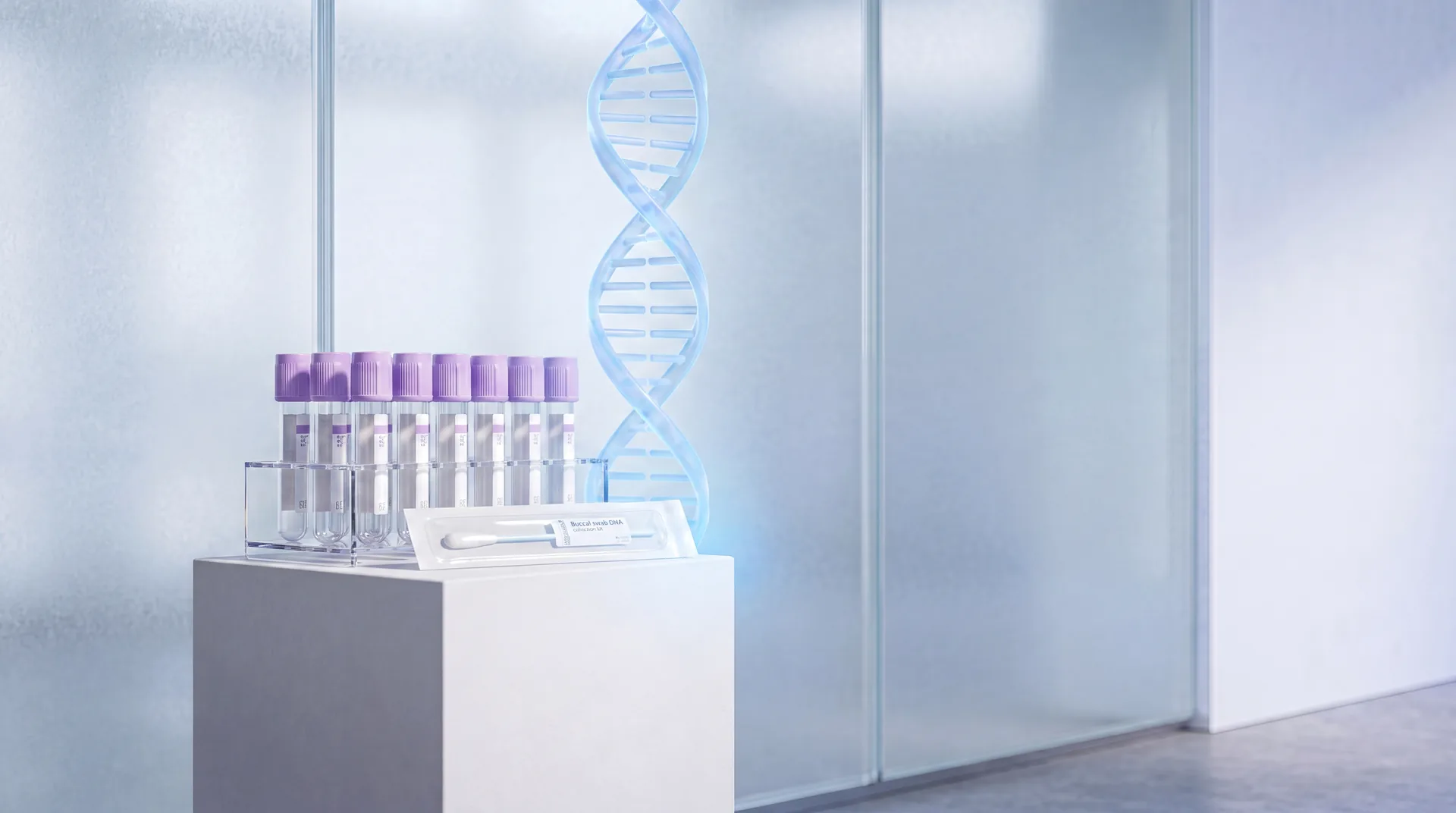
Where prior antidepressants underperformed, PharmacoCheck+ pharmacogenomics can clarify whether metabolism was a factor, informing the next step in the care plan.

New revenue line for the practice

For psychiatry and integrative practices adding rTMS, this is a reimbursable, durable service line. TITN handles placement, training, and the operational ramp.

How the Therapy Works

Map the target. Set the threshold. Deliver the course.

rTMS is a protocol, not a one-off. The first session establishes the patient-specific settings; the rest of the course delivers consistent stimulation over several weeks.

01

Cortical mapping

The clinician locates the treatment target over the prefrontal cortex, the cortical region associated with mood regulation. Done once at the start of the course.

02

Motor threshold

The system determines the patient's individual motor threshold, the dose reference that calibrates stimulation intensity to that patient. Captured under CPT 90867.

03

Daily delivery

Repetitive magnetic pulses are delivered in each session while the patient sits awake and alert. Sessions repeat across the multi-week course under CPT 90868.

04

Track and adjust

Response is tracked with depression rating scales. If re-mapping is needed, the motor threshold is re-determined under CPT 90869. The clinician owns every decision.

In the Room

Five finishes, built to disappear into a calm office.

ALTMS / BLOSSOM TMS ships in five cosmetic finishes so the device reads as furniture, not equipment. Sand is the default. Final product photography is added per finish.

[Swatch chips are placeholders for direction only. Product photo per finish added later, Sand shown as default in the hero.]

Pairs With · PharmacoCheck+

Know why the last medication missed, before the next decision.

rTMS is often considered after one or more antidepressants underperformed. PharmacoCheck+ pharmacogenomics tests how the patient metabolizes psychiatric medications, adding objective context to that history and to the care plan around the rTMS course.

For the clinician · PharmacoCheck+

Psychiatric medication metabolism, made explicit.

A pharmacogenomic panel that reports how the patient is likely to metabolize common psychiatric medications. It does not prescribe; it informs the conversation about why prior antidepressant trials may have fallen short and what that means for the path forward.

  • Provider-ordered, patient-specific metabolism report
  • Context for the "failed prior medication" history that rTMS coverage often requires
  • One coordinated workflow with the ALTMS course, run through TITN
Ask about PharmacoCheck+ →
For the practice · BMTG support

Operational and clinical support around the line.

BMTG, TITN's sister service, supports the documentation and clinical-context layer around advanced therapies. As ALTMS grows into a standard TITN treatment line, BMTG helps keep the paperwork, scales, and reporting consistent across sessions.

  • Standardized depression-scale tracking templates
  • WAVi brain baseline and retest, where the clinician wants objective documentation
  • Coordination so your team stays in its specialty
BMTG overview →
Specialty Fit

Who adds ALTMS / BLOSSOM TMS.

rTMS lands first where medication-resistant depression already walks through the door. Where it fits:

See It + Pair It

Watch a session, then build the full pathway.

Common questions

ALTMS, answered.

The questions practices ask before they add an rTMS treatment line.

What is ALTMS cleared to treat?

ALTMS (BLOSSOM TMS) is an FDA 510(k) cleared repetitive transcranial magnetic stimulation system (K220625) for adults with major depressive disorder. It is indicated for MDD only.

What CPT codes apply, and is it reimbursable?

A course of care typically maps to CPT 90867, 90868, and 90869. When medical-necessity criteria are met, rTMS for major depressive disorder is a covered, reimbursable service; see CMS coverage article A57072.

How long is a course of treatment?

rTMS is delivered as a series of outpatient sessions over several weeks, following the cleared treatment protocol. The exact course is set by the treating clinician.

Does it require anesthesia or downtime?

No. rTMS is noninvasive and delivered while the patient is awake, with no anesthesia and no recovery downtime.

How does ALTMS fit alongside TITN diagnostics?

When clinical assessment, informed by a brain baseline, leads toward depression care, ALTMS is the treatment line, and a follow-up WAVi assessment adds an objective data point to the clinical record. PharmacoCheck+ adds pharmacogenomic context to guide medication decisions.

Bring FDA-cleared rTMS into your practice.

Book a 15-minute call. We will walk through the cleared indication, the CPT course (90867 to 90869), the PharmacoCheck+ pairing, and the reimbursement math for your payers, then bring the device to you if you want to see it run. Reimbursement is typical from EOB data and varies by payer.

Book a 15-min call
Roberto Beteta · roberto@transitionitnow.com
(213) 444-6123 · Santa Monica, CA
Sources & verification Every clearance, code, and figure on this page traces to a live source. View the sources

Verified live June 9, 2026. Spot a broken or outdated link? Email roberto@transitionitnow.com.

FDA & regulatory

  1. FDA 510(k) database · search K220625, ALTMS Magnetic Stimulation Therapy System / Blossom TMS Therapy System, REMED Co., Ltd., Class II, product code OBP, 21 CFR 882.5805, decision substantially equivalent April 6, 2022, neurology panel
  2. FDA device classification, product code OBP · transcranial magnetic stimulator for the treatment of major depressive disorder (the US cleared indication scope)
  3. US clearance is restricted to Major Depressive Disorder. Other indications in the manufacturer's international (Korean) IFU are not FDA-cleared and are not marketed by TITN.

CPT & reimbursement

  1. CPT 90867, 90868, 90869 (AMA) · therapeutic repetitive transcranial magnetic stimulation treatment: initial, including cortical mapping and motor threshold determination (90867); subsequent delivery and management per session (90868); subsequent motor threshold re-determination with delivery and management (90869). 90867 is reported once per episode and not with 90868 or 90869.
  2. CMS Physician Fee Schedule Look-Up · confirm current locality rates for 90867 to 90869
  3. CMS Medicare Coverage Database · see the local billing-and-coding articles for TMS in adults with Major Depressive Disorder for documentation and coverage requirements
  4. Reimbursement figures are typical from TITN aggregated EOB data and vary by payer, plan, and locality. Coverage typically requires documented MDD with prior antidepressant failure in the current episode.

Manufacturer documentation

  1. REMED Co., Ltd. · manufacturer of the ALTMS / BLOSSOM TMS Therapy System (510(k) holder of record, K220625).
  2. Cosmetic finishes (Black, Gray, Sand, Taupe, White) and the Sand default per manufacturer product configuration; confirm against current spec sheet before publication.

Paired services

  1. WAVi Scan System · FDA 510(k) cleared EEG / ERP, see manufacturer research at wavimed.com/research for objective brain documentation around a course.
  2. PharmacoCheck+ pharmacogenomics · provider-ordered psychiatric medication-metabolism panel, paired with the ALTMS course through TITN.
rTMS for your practice? Book a call