An FDA 510(k) cleared repetitive transcranial magnetic stimulation (rTMS) system for Major Depressive Disorder. A non-invasive, non-systemic option for patients who have not responded to medication, delivered in-office as a course of care.
ALTMS / BLOSSOM TMS is a repetitive transcranial magnetic stimulation system from REMED Co., Ltd., cleared in the United States for adults with Major Depressive Disorder who have not improved on prior antidepressant medication in the current episode. It is a therapy, not a diagnostic, and the treating clinician owns every decision in the course.
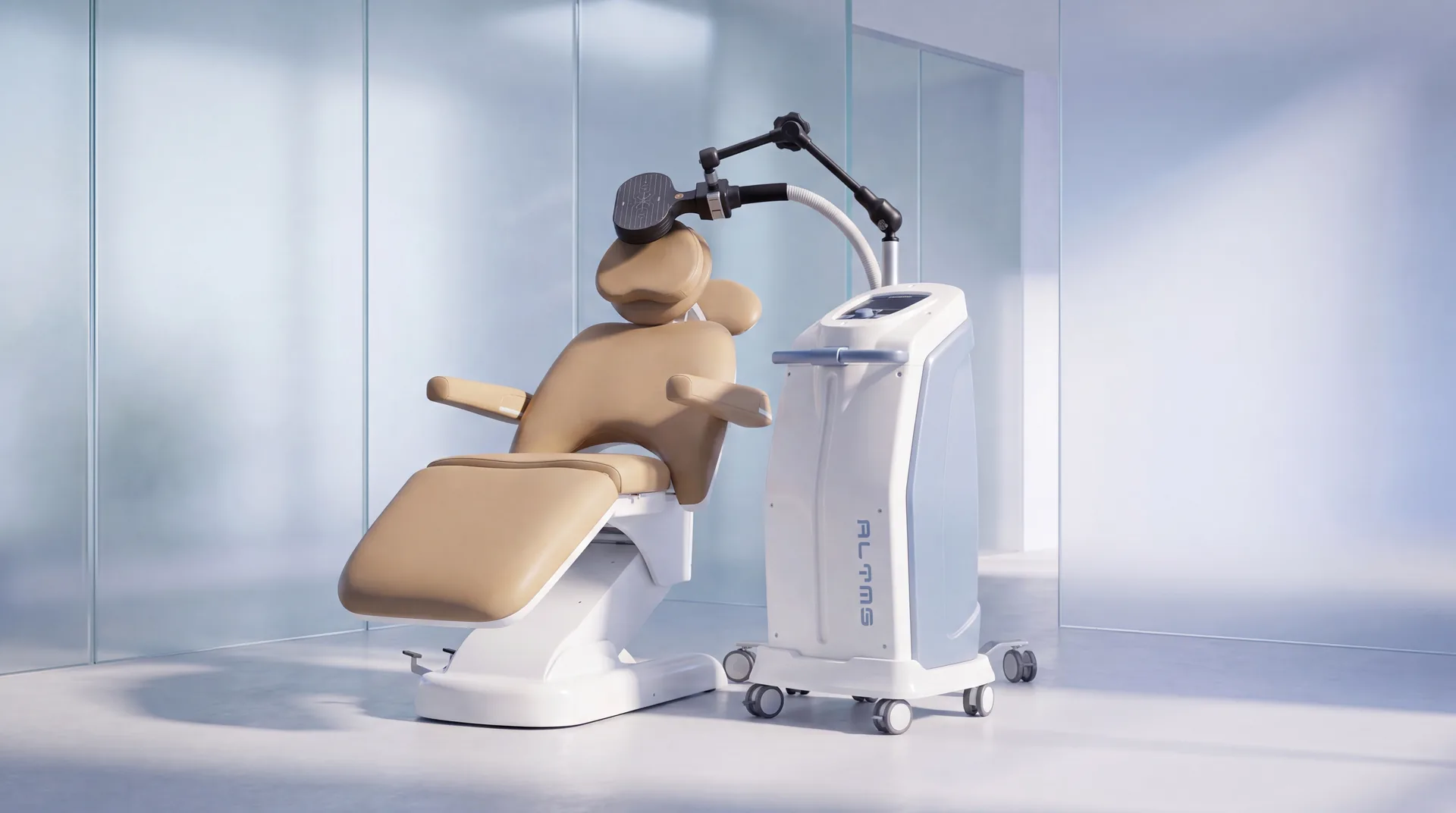
Repetitive transcranial magnetic stimulation delivered by a figure-8, oil-cooled coil to the left dorsolateral prefrontal cortex, at a target the clinician locates. Drug-free and non-systemic, given in office while the patient sits awake.
10 Hz sessions, five a week for about six weeks per the manufacturer's instructions for use. Sessions run about 19 to 38 minutes per the manufacturer's instructions for use.
Cleared in the United States for one thing, verbatim: "indicated for the treatment of Major Depressive Disorder in adult patients, who have failed to achieve satisfactory improvement from prior antidepressant medication in the current episode."
Known risks. rTMS carries a known risk of seizure. The treating clinician screens every patient against the manufacturer's contraindications, which include implanted devices in or near the head, epilepsy or a history of seizures, and pregnancy (REMED instructions for use, section 1.4).
FDA 510(k) K220625 (REMED Co., Ltd.). The clearance, the verbatim indication and coverage are under Clearance & coverage below.
One cleared indication, one protocol, run differently by specialty. Every use below sits inside Major Depressive Disorder in adults, and TITN handles placement, staff training, and the operational ramp so your team stays in its own specialty.
The on-label core: adults with Major Depressive Disorder who have not improved on prior antidepressant medication in the current episode, treated in your own chairs across the course.
Book a call →A drug-free option to offer inside an existing MDD caseload, delivered by trained staff under the treating clinician's supervision on a fixed protocol.
Talk to TITN →rTMS runs alongside the other procedural work in the practice: an initial mapping and motor-threshold session, then sessions five days a week that schedule like any recurring appointment.
Ask about the room →Referrals from neurology: adults with diagnosed Major Depressive Disorder who have not improved on prior antidepressant medication in the current episode. ALTMS treats the MDD only.
Neurology page →A non-systemic addition to the care plan for patients with diagnosed MDD who want to avoid another prescription, tracked with standardized depression scales across the course.
Integrative page →For the patient with diagnosed MDD who wants an in-office treatment scheduled around the rest of their week.
Geriatrics page →Pain practices that also manage diagnosed Major Depressive Disorder in adults. ALTMS treats the depression, not the pain.
Pain Management page →rTMS is a protocol, not a one-off. The first session establishes the patient-specific settings; the rest of the course delivers consistent stimulation over several weeks.
The clinician locates the treatment target over the prefrontal cortex, the cortical region associated with mood regulation. Done once at the start of the course.
The system determines the patient's individual motor threshold, the dose reference that calibrates stimulation intensity to that patient. Captured on the initial treatment line.
Repetitive magnetic pulses are delivered in each session while the patient sits awake and alert. Sessions repeat across the multi-week course, each one its own treatment line.
Response is tracked with depression rating scales. If re-mapping is needed, the motor threshold is re-determined and coded as its own line. The clinician owns every decision.
ALTMS / BLOSSOM TMS ships in five cosmetic finishes so the device reads as furniture, not equipment. Sand is the finish shown. Final product photography is added per finish.
Swatch chips show finish direction; product photography per finish follows. Sand is the finish shown in the hero.
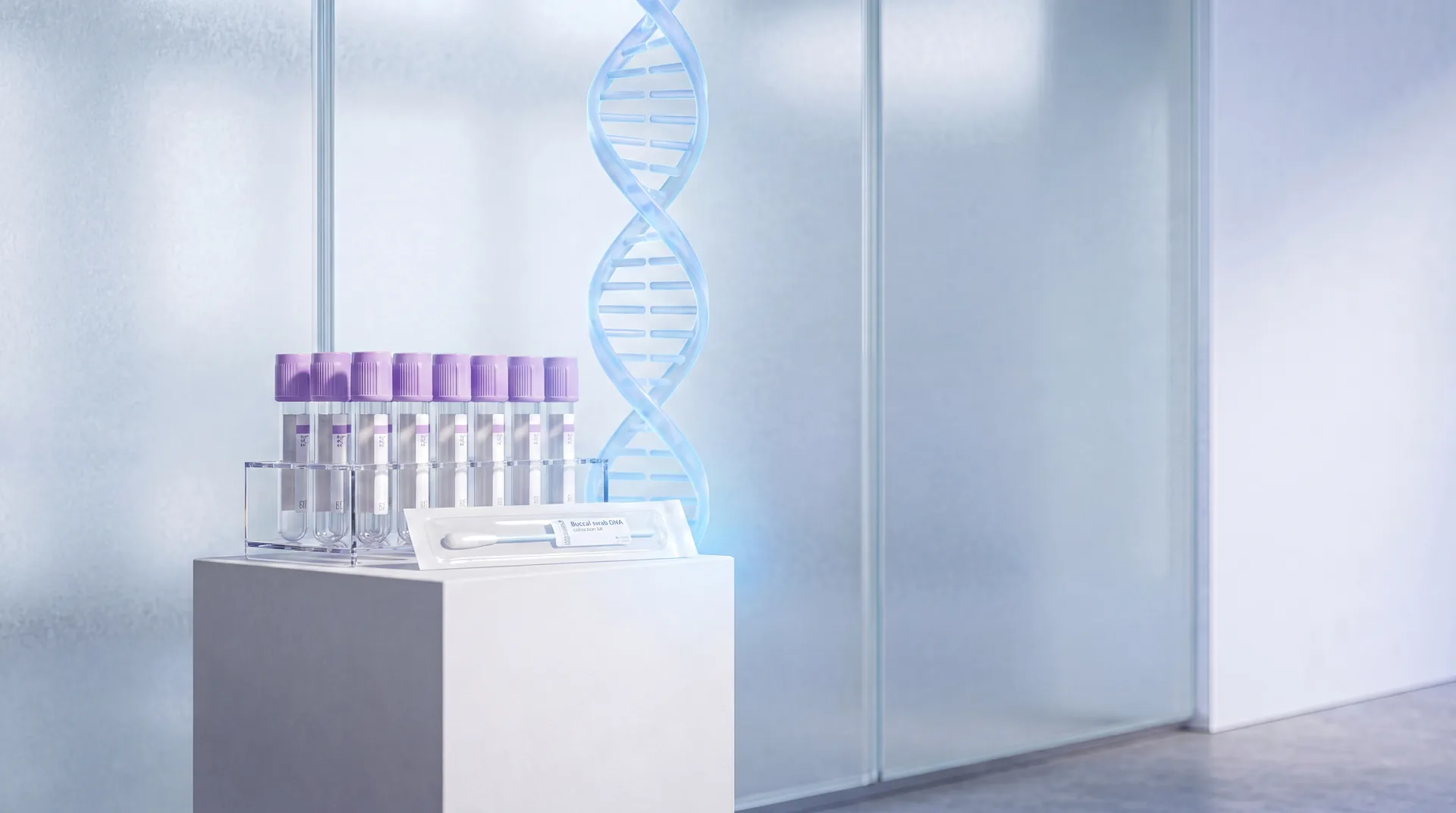
rTMS is often considered after one or more antidepressants underperformed. PharmacoCheck+ pharmacogenomics tests how the patient metabolizes psychiatric medications, adding measured context to that history and to the care plan around the rTMS course.
A pharmacogenomic panel that reports how the patient is likely to metabolize common psychiatric medications. It does not prescribe; it informs the conversation about why prior antidepressant trials may have fallen short and what that means for the path forward.
BMTG, TITN's sister service, supports the documentation and clinical-context layer around advanced therapies. As ALTMS grows into a standard TITN treatment line, BMTG helps keep the paperwork, scales, and reporting consistent across sessions.
ALTMS / BLOSSOM TMS is FDA 510(k) cleared for Major Depressive Disorder. The international instructions for use list other indications. Those are not cleared in the United States, so TITN does not market them. The discipline is the point.
K220625 · ALTMS Magnetic Stimulation Therapy System / Blossom TMS Therapy System, REMED Co., Ltd. Cleared substantially equivalent on April 6, 2022. Product code OBP, regulation 21 CFR 882.5805, neurology panel. The FDA defines product code OBP as a transcranial magnetic stimulator for the treatment of major depressive disorder.
Coverage typically requires documented MDD with failure of one or more adequate antidepressant trials in the current episode. Verify your locality with the CMS PFS Look-Up. Coverage and reimbursement vary by payer.
The questions practices ask before they add an rTMS treatment line.
ALTMS, also sold as BLOSSOM TMS, is FDA 510(k) cleared, not FDA approved, under K220625 (REMED Co., Ltd., product code OBP, 21 CFR 882.5805, April 6, 2022). The United States clearance covers one indication: treatment of Major Depressive Disorder in adult patients who have failed to achieve satisfactory improvement from prior antidepressant medication in the current episode.
Repetitive magnetic pulses are delivered by a figure-8, oil-cooled coil to the left dorsolateral prefrontal cortex, at a target the treating clinician locates. The focused magnetic field induces small electrical currents in that cortical tissue. It is non-invasive and non-systemic: no surgery, no anesthesia, no sedation, and no drug circulating through the body, so the side-effect profile differs from medication.
Per the manufacturer's instructions for use, a standard course runs 10 Hz sessions five days a week for about six weeks, with sessions of roughly 19 to 38 minutes. The first session establishes cortical mapping and the patient's motor threshold; the rest deliver the protocol. The treating clinician sets the actual course and owns every decision within it.
The treating clinician screens every patient against the manufacturer's contraindications, which per the REMED instructions for use (section 1.4) include implanted devices in or near the head, epilepsy or a history of seizures, and pregnancy. Conductive or ferromagnetic metal near the treatment coil, such as cochlear implants, deep brain stimulators, or aneurysm clips, is the central concern in that screen.
Commonly reported effects are scalp discomfort at the treatment site and headache during the first sessions, typically mild and decreasing as the course continues. Seizure is a rare but recognized risk of rTMS, and it is the reason the seizure-history screening question exists. The treating clinician reviews the full risk profile with each patient before the course begins.
No. rTMS is non-invasive and delivered while the patient sits awake and alert, with no anesthesia, no sedation, and no recovery downtime. Patients drive themselves home and return to the day. That is one of the practical differences from electroconvulsive therapy, which requires anesthesia and induces a generalized seizure in a monitored setting.
They are separate procedures and are not interchangeable. rTMS is non-invasive, requires no anesthesia, does not induce a generalized seizure, and is delivered in an outpatient chair across a multi-week course. ECT is a more invasive procedure performed under anesthesia and is typically reserved for more severe or treatment-refractory presentations. The treating clinician decides which, if either, fits the patient.
A treating physician determines candidacy, performs or directs cortical mapping and motor-threshold determination, and oversees the course. Daily sessions are then delivered by trained staff under that physician's supervision on a fixed protocol. TITN handles placement, staff training, and the operational ramp so the practice stays in its own specialty rather than building the workflow from scratch.
A course of care typically maps to one code for initial treatment including cortical mapping and motor-threshold determination, one for subsequent sessions, and one for re-mapping when it is required. Coverage and payment are decided by each payer on the documented indication, and most require documented Major Depressive Disorder with prior antidepressant failure in the current episode.
When clinical assessment, informed by a measured brain baseline, leads toward depression care, ALTMS is the treatment line, and a follow-up WAVi assessment adds a measured data point to the clinical record. PharmacoCheck+ pharmacogenomics adds context on how the patient metabolizes psychiatric medications, which informs the medication conversation running alongside the rTMS course.
Book a 15-minute call. We will walk through the course, the room and staffing it needs, and coverage for your payers, then arrange a demonstration.
Book a callVerified live August 27, 2026. Spot a broken or outdated link? Email support@transitionitnow.com.