For Pain Management Practices

Measured autonomic findings in the chronic pain workup.

Pain management practices use TITN for TM-Flow autonomic, sudomotor, and vascular testing, ordered when clinically indicated and captured chairside in about ten minutes. ALTMS adds FDA-cleared rTMS for adults with diagnosed major depressive disorder who have not improved on prior antidepressant medication; it treats the depression, not the pain.

TM-Flow ALTMS
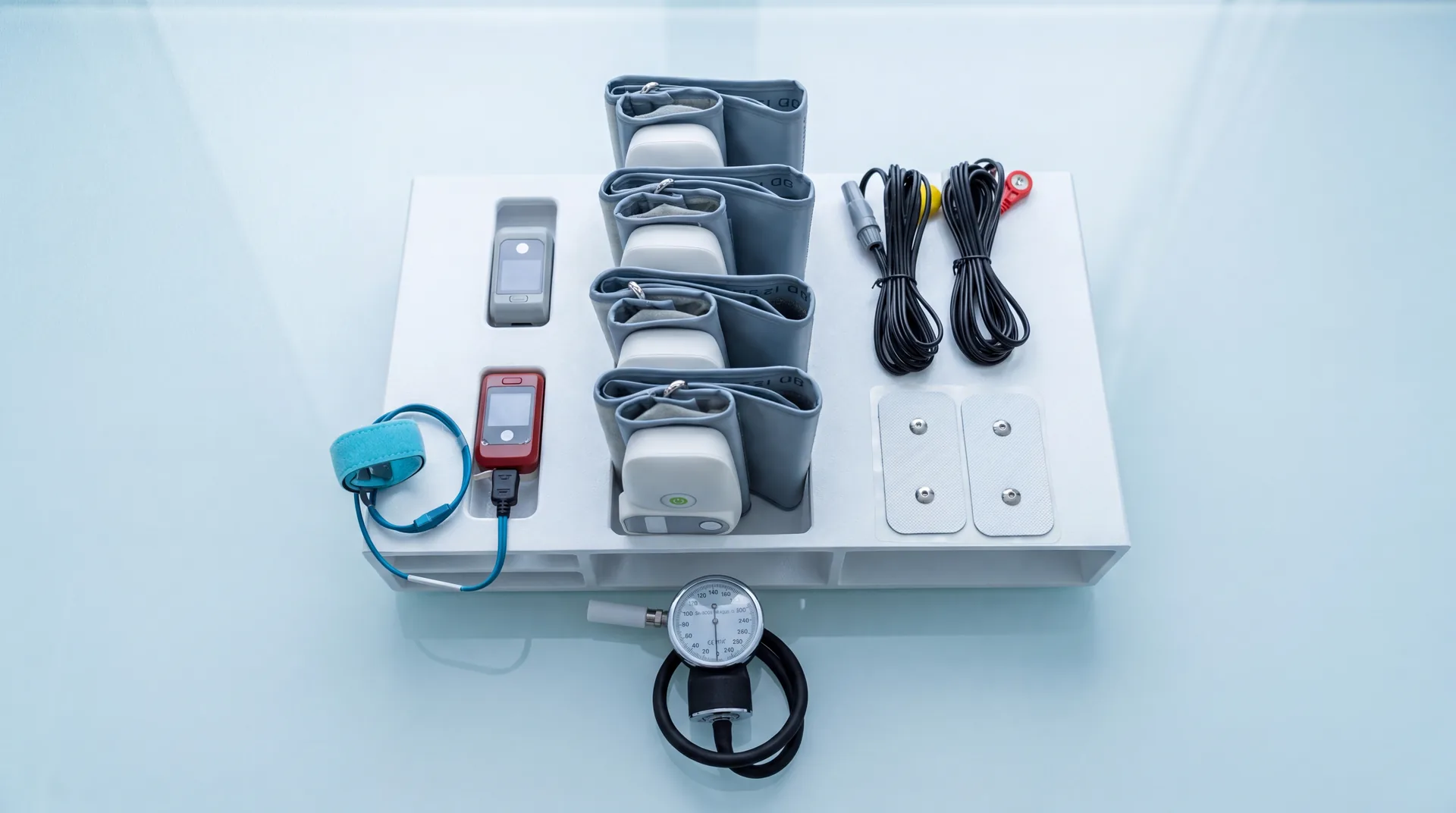
TM-Flow System workstation with the autonomic, sudomotor and vascular modules.
TM-Flow System · autonomic, sudomotor, vascular · about ten minutes
Why pain management practices work with TITN

Why add autonomic testing to a chronic pain workup?

Because complex pain presentations often leave the chart without measured findings. TM-Flow records heart rate variability, sudomotor response from galvanic skin response, and ankle-brachial indices as documented indices in one chairside visit. Autonomic testing is a recognized adjunct in the small fiber neuropathy workup. Your clinician interprets every value; the system does not diagnose.

01

Document the autonomic picture

TM-Flow captures heart rate variability, sudomotor function, ankle-brachial indices, and arterial stiffness in one ten-minute chairside test, ordered when clinically indicated and documented for the record.

02

Read it beside the exam

Autonomic and sudomotor findings sit alongside history, exam, and where indicated skin biopsy. A normal autonomic result does not rule out small fiber neuropathy, and an abnormal one is one input, not a diagnosis.

03

Treat the depression separately

For adults with diagnosed major depressive disorder in the caseload who have not improved on prior antidepressant medication, ALTMS delivers FDA-cleared rTMS (K220625) as a course of care. The clearance covers major depressive disorder only. It treats the depression, not the pain.

Diagnostics that fit pain management

Which devices fit a pain management workflow?

TM-Flow is the measurement layer: three FDA 510(k)-cleared modules (K173696, K152216, K200141) covering autonomic function, sudomotor response, and ankle-brachial index, with coverage decided by your payer. ALTMS is FDA-cleared rTMS (K220625) for adults with major depressive disorder who have not improved on prior antidepressant medication. The Hue Light BAHI suite is positioned under FDA General Wellness, not FDA cleared, and is cash pay.

Autonomic platform
TM-Flow System workstation, ANS / SUDO / ABI
Autonomic · Sudomotor · Vascular
TM-Flow System
(ANS, SUDO, ABI)

Autonomic function, sudomotor, and ankle-brachial testing in one visit, measuring HRV, sudomotor response, and ABI. TM-Flow System, built on three FDA 510(k)-cleared modules (K173696, K152216, K200141).

What you look at Autonomic and vascular testing in pain practices: heart rate variability, galvanic skin response, and ankle-brachial indices measured in one ten-minute visit and documented for the record.
K173696 · K152216 · K200141
LD TechnologyOpen page →
Advanced therapies

rTMS for the depression that travels with chronic pain, plus a recovery layer.

ALTMS is FDA-cleared for adults with major depressive disorder who have not improved on prior antidepressant medication. In a pain management practice, patients with diagnosed MDD are a clinical target in their own right. ALTMS addresses the depression, not the pain itself. The Hue Light BAHI suite adds a recovery layer alongside the care plan.

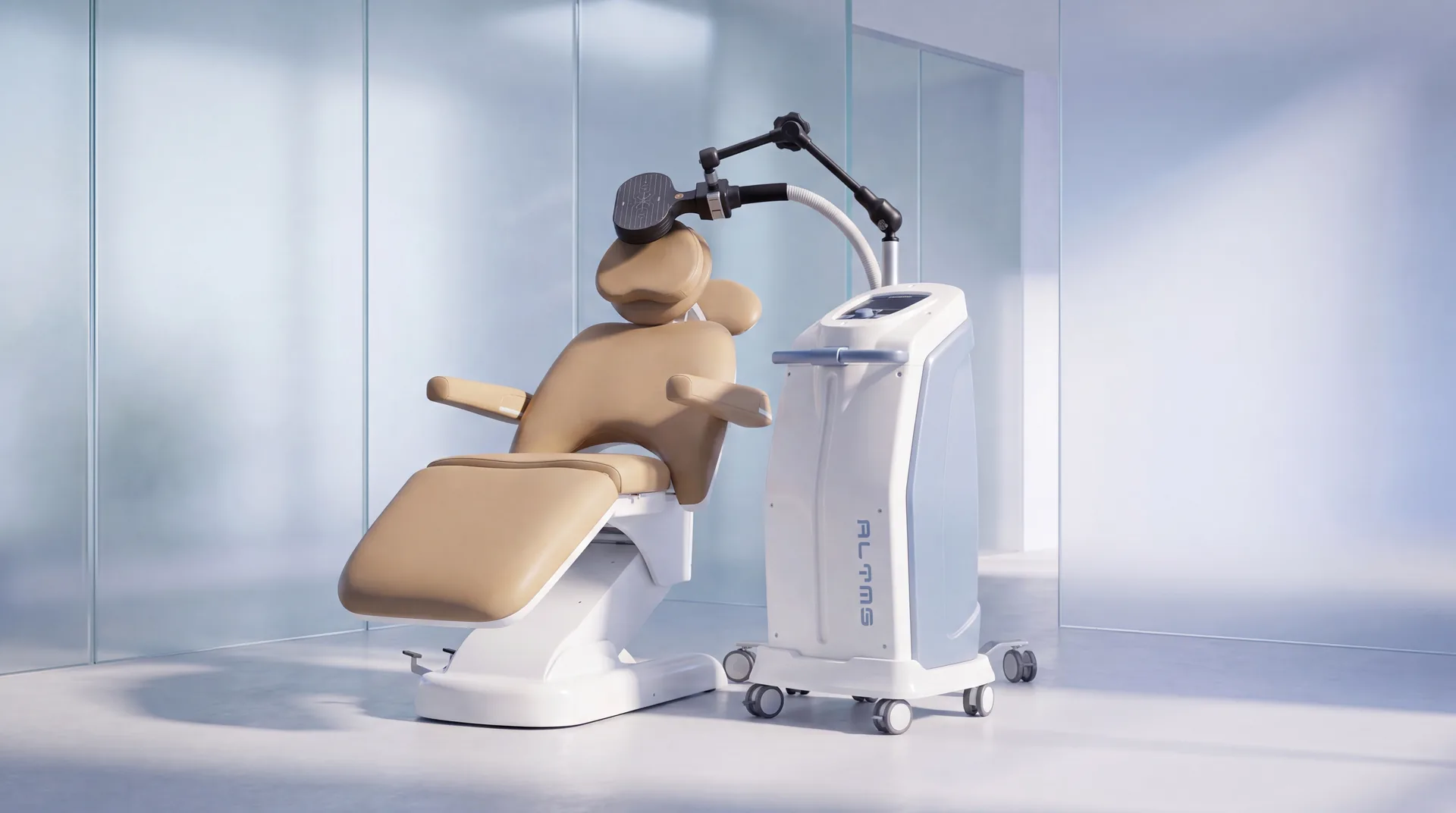
ALTMS BLOSSOM TMS device, Sand finish
Brain · TMS
ALTMS / BLOSSOM TMS

FDA-cleared rTMS therapy for adults with major depressive disorder who have not improved on prior antidepressant medication. The MDD that often travels with chronic pain is its own clinical indication; ALTMS targets that comorbidity, not the pain itself.

FDA 510(k) K220625 Billed as a course of care
REMED Co., Ltd. · Class IIOpen page →
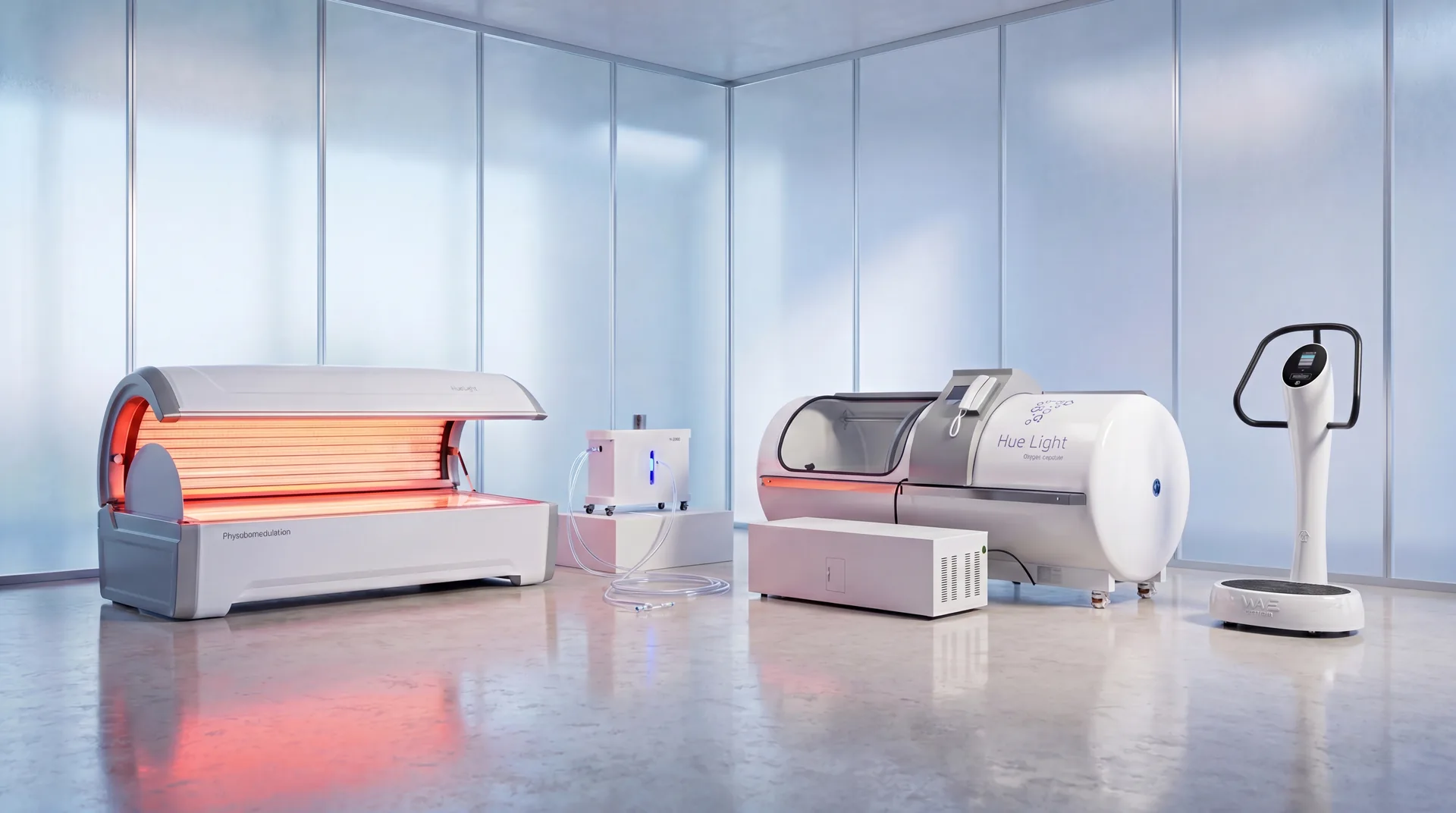
Hue Light USA BAHI suite, whole-body wellness devices
Recovery · General wellness
Hue Light BAHI Suite

Photobiomodulation, molecular hydrogen, pressurized oxygen, and whole-body vibration. A recovery and wellness layer alongside the care plan.

General wellness · Not FDA cleared
Hue Light USAOpen page →
Coverage

Is it covered, and how is it billed?

Medical necessity comes first. Every test in this table is for use when it is clinically indicated and medically necessary for that patient. We set your workflow to that standard and give you the documentation to support it. Coverage and payment are decided by each payer on the documented indication. Nothing here is a guarantee of payment.
Coverage by contractor and plan Autonomic function testing on TM-Flow, measuring HRV and sudomotor response. No TITN figurecoverage and payment set by your MAC and plan
Course of care rTMS for major depressive disorder across a full treatment course, on the ALTMS line, billed as a course of care when coverage criteria are met. MDD is the covered indication; not pain. Per your MAC's TMS articleNoridian A57692 in California; Novitas A57072 in its states
What you get

What comes with a placement?

The reason clinics keep the equipment running is the wrap around it. Here is what comes with a pain management placement, and how we build the practice around it.

Supported from day one
01

Clinical training

Live sessions, recorded walkthroughs, and interpretation guides. Your team runs real tests; a TITN clinical trainer reviews the reports with them until interpretation sticks.

02

Billing optimization

The coverage checklist per device, your contractor's policy read with you, documentation templates, and your certified coder in the loop.

03

Implementation

On-site or remote setup, calibration, and staff onboarding. A named TITN contact, not a ticket queue.

04

Financing

Flexible financing structures designed around your expected reimbursement timing. Multiple lender and lease pathways with transparent ROI modeling.

We grow the practice around it
01

Consulting

Workflow design, reimbursement coaching, protocol setup. Practical, billable advice.

02

WordPress Websites

Mobile-first WordPress sites with scheduling baked in. The same aesthetic as this one.

03

Marketing Video

AI-generated brand films or full productions filmed at your clinic. Edited, scored, finished.

04

SEO + CRM

Local SEO, structured data, and CRM lead-intake that routes new-patient inquiries automatically.

Proof

Why pain practices choose TITN.

Three cleared modules TM-Flow is built on K173696, K152216, and K200141.
About ten minutes Typical chairside test time for the full three-module capture.
Payer-decided coverage Coverage for TM-Flow is set by your contractor and plan on the documented indication.
Common questions

Pain management, answered.

The questions a pain practice asks before it orders anything.

Which diagnostics fit a pain-management practice?

TM-Flow for autonomic, sudomotor, and vascular testing, built on three FDA 510(k)-cleared modules (K173696, K152216, K200141) and run chairside in about ten minutes. It records heart rate variability, galvanic skin response, ankle-brachial indices, and the manufacturer's derived arterial stiffness indices as measured values documented for the record. Ordered when clinically indicated, never routinely on every patient.

Is pain management testing covered?

TM-Flow coverage and coding are set by each Medicare contractor and commercial plan on the documented indication, and California's contractor publishes no autonomic policy. TITN recommends no code; your contractor and plan decide, and your own certified coder should confirm anything before you bill it. Autonomic function testing also carries documented subject-preparation, environment, and trained-personnel requirements in Medicare coding guidance.

Can autonomic or sudomotor testing help evaluate small fiber neuropathy as a pain source?

Yes, as an adjunct. Autonomic testing, including sudomotor and cardiovagal measures, is a recognized part of the workup for suspected small fiber neuropathy alongside clinical history, exam, and skin biopsy for intraepidermal nerve fiber density. TM-Flow documents those measured indices in one visit. It is not a replacement for biopsy-confirmed diagnosis, and the literature notes that some autonomic tests are time- and resource-intensive.

Does a normal autonomic test rule out small fiber neuropathy?

No. Diagnosis rests primarily on history and clinical examination, with functional testing and skin biopsy used for confirmation. A normal autonomic result does not exclude small fiber neuropathy on its own, and it should not close the workup. Read TM-Flow indices as one documented data point the treating clinician weighs against the rest of the picture.

How accurate is sudomotor testing for identifying neuropathic pain sources?

Reported sensitivity and specificity vary by study and by test site, with feet and hands performing differently, and results are strongest when the test is paired with an established screening instrument rather than used alone. TM-Flow's sudomotor module (K152216) measures galvanic skin response related to sweat-gland function. Treat the value as a measured index your clinician interprets, not a standalone accuracy claim.

Does TMS work for chronic pain, not just depression?

ALTMS is FDA cleared (K220625) for adults with major depressive disorder who have not improved on prior antidepressant medication in the current episode. That clearance does not extend to pain. Pain-specific rTMS indications are a separate and less established evidence question, and nothing on this page should be read as a pain claim. In a pain practice, ALTMS treats the diagnosed depression, not the pain.

What are the contraindications for rTMS?

The treating clinician screens every patient against the manufacturer's contraindications, which include implanted devices in or near the head, epilepsy or a history of seizures, and pregnancy, per the REMED instructions for use, section 1.4. rTMS carries a known risk of seizure. Conductive or ferromagnetic metal near the coil, such as cochlear implants, deep brain stimulators, aneurysm clips, and stents, is the core exclusion.

Who signs off on the autonomic reports in the chart?

TM-Flow results return on TITN's HIPAA-compliant portal and can come back interpreted through BMTG rather than as a raw tracing, so your team gets a read. Reports are prepared by outside credentialed reviewers, and board-certified neurologists sign the BMTG reads on autonomic data. Nothing here implies an in-house sign-off; the ordering provider remains the patient's point of care.
Start with your pain management practice.

A short call covers devices, reimbursement, and onboarding for your workflow. No commitment beyond the first conversation.

Prefer email? support@transitionitnow.com  ·  (213) 444-6123  ·  Santa Monica, CA
Sources & verification Every clearance, code, and figure on this page traces to a live source. View the sources

FDA 510(k) clearances verified in the openFDA device database. Coverage policies are read in the CMS Medicare Coverage Database. Coverage and payment are decided by each payer on the documented indication; nothing on this site is a guarantee of payment.