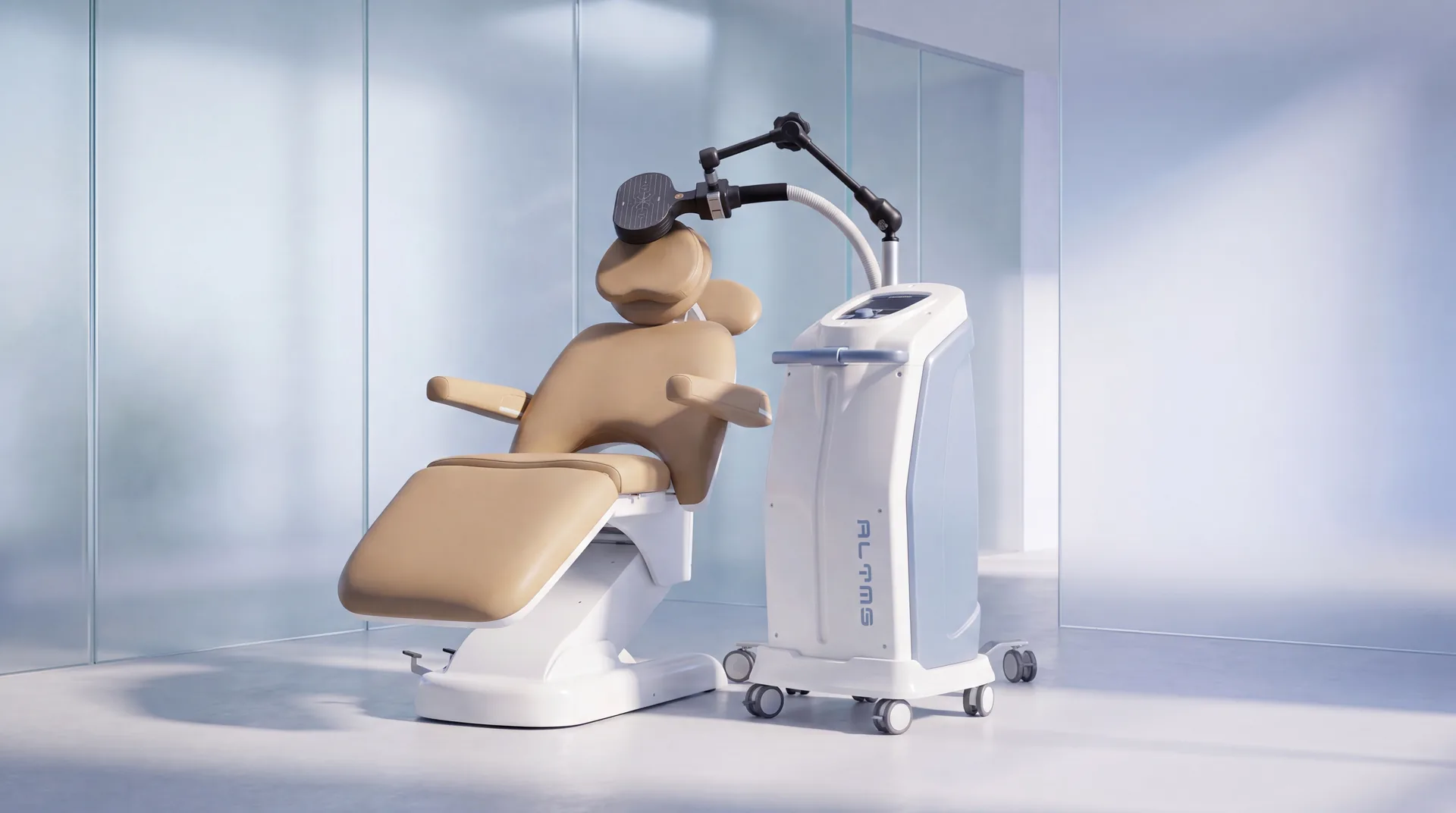
An FDA 510(k) cleared EEG and event-related potential platform that captures measured brain electrical activity to aid in diagnosis, not to diagnose any condition on its own. Fast to run and interpreted for you through BMTG, with coverage decided by your payer. The brain half of the baseline, treat, retest method.
WAVi records what the brain is doing electrically and quantifies it against WAVi's built-in normative database. It looks for measured change on a repeatable protocol. The clinician interprets every read; WAVi does not diagnose any condition as a standalone test.
Resting brain-wave activity, awake and drowsy, recorded from a rapid-placement headset. Shows the distribution of rhythm by frequency band and region at this visit.
The event-related potential to an auditory oddball task: amplitude and latency of the P300 cognitive-processing response, with reaction time recorded alongside it.
Quantitative analysis against WAVi's built-in, age-matched normative database, so a baseline and a retest compare on the same numbers and the patterns worth a clinician's attention stand out.
Cleared to aid in diagnosis (FDA 510(k) K213900). It does not diagnose any condition on its own. The clearance, the verbatim indication and coverage are under Clearance & coverage below.
One protocol, read differently by specialty. Each use is an aid to your clinical judgment, captured the same way every visit so the retest is a true comparison.
Resting rhythms and P300 amplitude and latency as a quantified baseline next to the exam, then the same protocol after treatment. The BMTG read comes back signed by a board-certified neurologist.
Neurology page →A baseline on the same protocol when it is clinically indicated, then a retest after an event. Your clinical team makes the return-to-play call; WAVi documents the measured change between baseline and retest.
Sports Medicine page →P300 and reaction-time markers before a course of care (ALTMS or medication), then after. Attention and focus markers sit alongside the published theta/beta literature as context, not a test.
Pairs with ALTMS →A cognitive baseline at the first visit, tracked on the same protocol over years. Pairs with TM-Flow autonomic data in the BMTG Cognitive Function Report, which documents measured data and does not diagnose.
Geriatrics page →Before-and-after data around a protocol (photobiomodulation, hydrogen, a nutrition plan), typically 4 to 6 weeks or 12 weeks apart, so the change is documented rather than described.
Integrative page →Longitudinal tracking through a program. The same protocol at each visit turns "I think I feel sharper" into a side-by-side trend the patient can see.
Rehab page →The referring provider orders a WAVi-only Post-Injury Brain Function Report, signed by a board-certified neurologist who can support deposition. Admissibility is decided by the court and varies by jurisdiction.
BMTG Post-Injury Brain Function Report → Personal injury clinic page →A trained tech runs it, not the physician. Consistent placement and protocol are what make the retest a real comparison, and the retest is why practices keep it: a baseline with nothing to compare against is a snapshot; two on the same protocol are a trend.
Rapid placement of multiple EEG electrodes in a routine clinical setting. Comfortable, gel-free saline sensors, no gel mess for the patient.
Resting EEG awake and drowsy, plus event-related potentials including the P300 cognitive-processing marker. Recorded the same way every visit.
Quantitative analysis against WAVi's built-in normative database surfaces the patterns worth a clinician's attention.
Results return on TITN's HIPAA-compliant portal with template visuals, interpreted through BMTG. You get a read, not a raw waveform.
Retest cadence. Retest frequency is decided by your payer on documented medical necessity. Wellness programs: before and after treatment, typically 4 to 6 weeks or 12 weeks.
Every WAVi scan can come back interpreted. BMTG, TITN's sister service, delivers two distinct reports. The Post-Injury Brain Function Report is signed by a board-certified neurologist; the Cognitive Function Report is read by a BMTG board-certified neurologist or by your own. Neither report diagnoses; each documents measured data a clinician interprets. You stay in your specialty.
WAVi scans (with TM-Flow autonomic data where used) come back through TITN's HIPAA-compliant portal with our template visuals and wording. Interpreted by a BMTG board-certified neurologist, or by your own neurologist using our templates. For functional, longevity, and cognitive-screening use.
WAVi-only Post-Injury Brain Function Reports ordered by the treating provider and signed by a board-certified neurologist. Quantified neurodiagnostic documentation for personal-injury and med-legal cases. Cash-pay or lien-based depending on case structure.
WAVi captures and analyzes brain electrical activity. The clinician interprets it. We hold the claims to the cleared indication, and BMTG adds the neurologist read so you do not have to.
K213900 · WAVi SCAN EEG System and Accessories. Product code GWQ, regulation 21 CFR 882.1400 (electroencephalograph). Cleared May 2022.
Read your contractor's policy in the CMS Medicare Coverage Database before billing.
K162460 Research EEG Desktop variant (subject to a 2023 Class 2 recall) is not the cleared system TITN places; the device on this page is K213900.
The questions physicians ask before they order the first scan.
Yes. WAVi is an FDA 510(k) cleared EEG and event-related-potential assessment system (K213900). The clearance covers acquisition, display, and storage of EEG and ERP data to aid in diagnosis. It is not a clearance to detect or diagnose any specific condition, and it is not a standalone diagnostic test. The clinician interprets the data and makes the clinical decision.
Coverage is decided by your payer on the documented indication. WAVi is billed under the standard codes for the services performed, and the cognitive assessment visit is billed separately when it is performed and documented. Read your Medicare contractor's policy in the CMS Medicare Coverage Database and confirm every code with your certified coder before the first claim.
About twenty minutes with the headset on, run by a trained tech rather than the physician. Placement uses gel-free saline sensors in a routine clinical setting, with no gel and no prep beyond seating the patient. A board-certified neurologist interprets the data and signs the report through BMTG. Credentials are on file, available on request. Ask your TITN contact, or email support@transitionitnow.com, for the credentials packet: board certification and licensure.
A routine clinical EEG is read visually for standard patterns, such as epileptiform activity, by an interpreting physician. Quantitative EEG digitizes the same recorded signal and compares features like band power statistically against a normative database. qEEG does not replace a diagnostic EEG ordered to rule out epilepsy; it adds quantified numbers that a baseline and a retest can be compared on.
P300 is an event-related potential recorded during an auditory oddball task, reflecting attention allocation and the speed of stimulus evaluation. WAVi records its amplitude and latency alongside reaction time. Reduced amplitude and prolonged latency are associated with cognitive slowing in several conditions, but these markers are not specific to any single disease and are interpreted by the clinician in context.
Yes. Every scan is quantified on the same protocol, so a baseline and a retest compare directly against each other rather than only against a population norm. That is the usual reason practices keep it: one scan is a snapshot, two on the same protocol are a trend. Retest frequency is decided by your payer on documented medical necessity.
A baseline is captured before injury or early in care, then the same protocol is repeated after a suspected event and compared against that patient's own baseline. WAVi documents the measured change. Your clinical team makes the return-to-play call; published guidance is clear that tools like this should not be used alone for diagnosis or return-to-play decisions.
No. A WAVi scan is a brief, quantified EEG and ERP assessment; a neuropsychological evaluation is a comprehensive battery administered and interpreted by a neuropsychologist. They answer different questions. WAVi is a complementary data point next to the exam and the history, not a substitute where full neuropsychological testing is clinically indicated.
Standard EEG-type limitations apply. Scalp wounds, lesions, or skin conditions at electrode sites can prevent good contact, and a patient who cannot sit reasonably still for the recording will not produce usable data. Eligibility is a clinical judgment for the ordering provider, made per the device documentation, not a blanket assumption that every patient can be scanned.
Downstream, yes. When a provider orders WAVi and shares the report with counsel, BMTG can produce a Post-Injury Brain Function Report with quantified neurodiagnostic documentation signed by a board-certified neurologist. Admissibility is decided by the court and varies by jurisdiction; some courts have excluded quantitative EEG evidence offered as proof of brain injury, so treat it as documentation, not as settled proof.
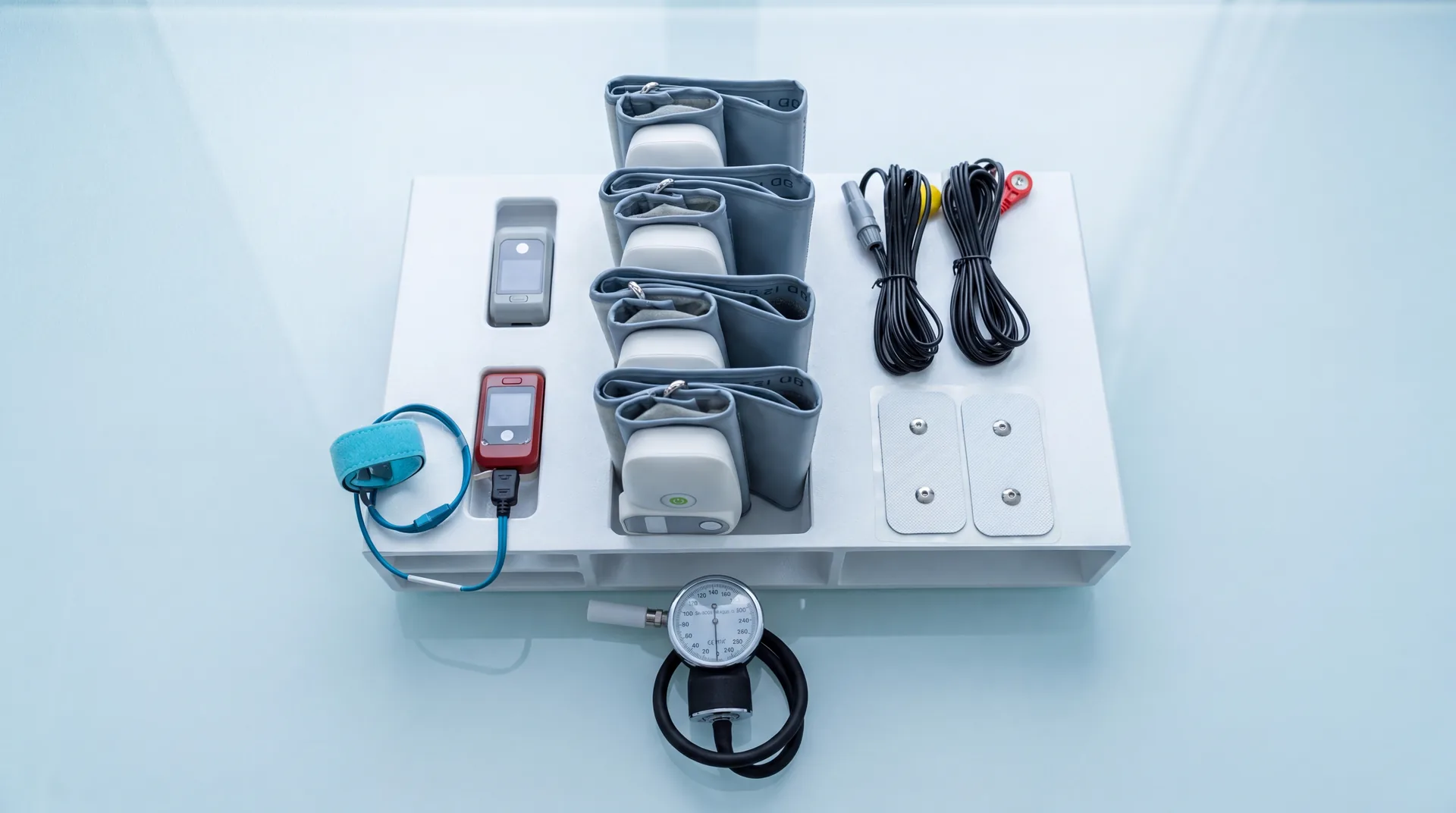
Book a 15-minute call. We will walk through the scan, the BMTG read, and coverage for your payers, then bring the device to you if you want to see it run.
Book a callVerified live August 27, 2026. Spot a broken or outdated link? Email support@transitionitnow.com.