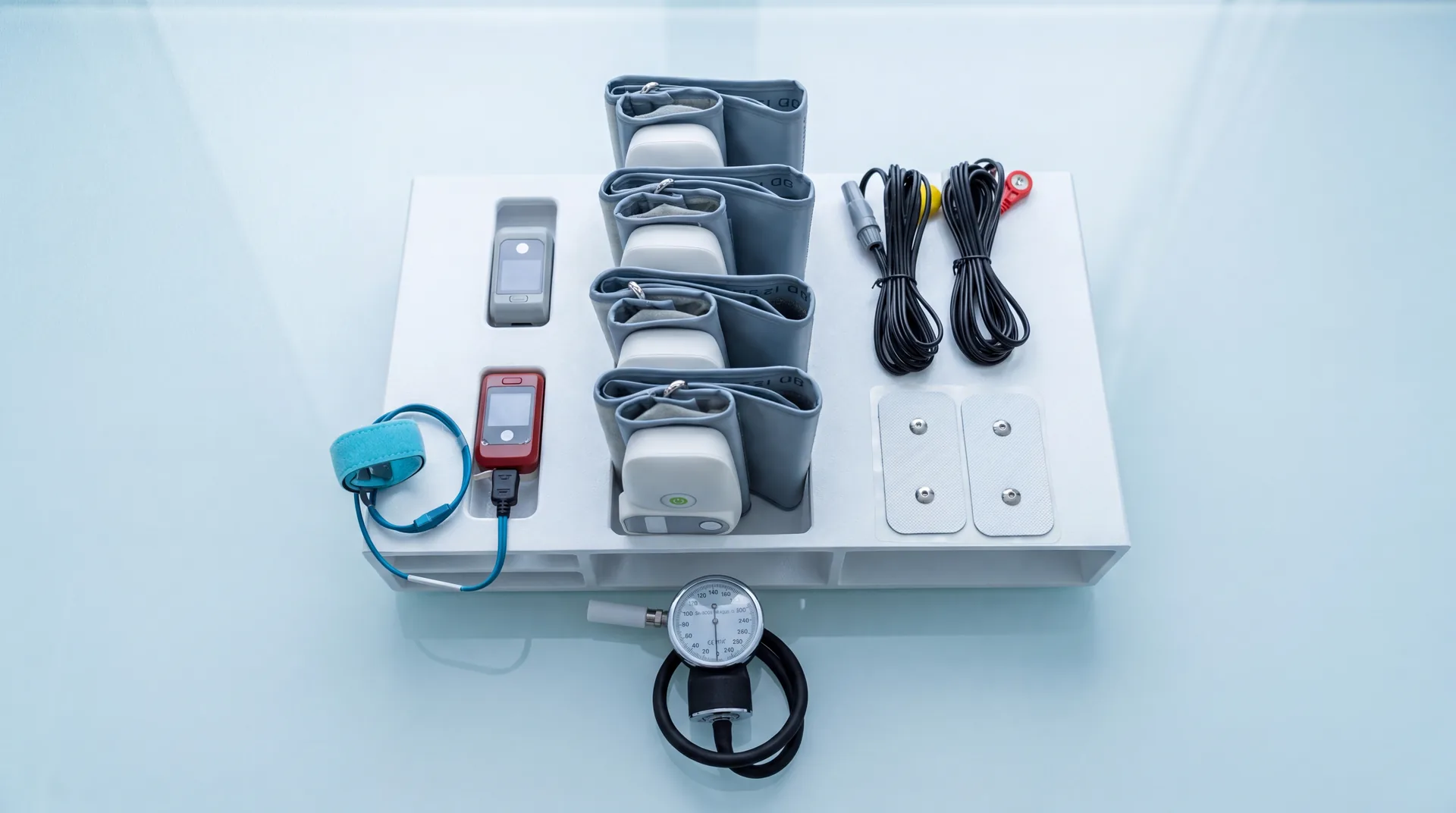
Rehabilitation and PM&R practices use TITN to measure change from baseline to retest across a program. WAVi records EEG and event-related potentials to aid in diagnosis, not to diagnose any condition on its own; TM-Flow records autonomic, sudomotor, and ankle-brachial data, both ordered when clinically indicated.
Because functional milestones tell you what the patient can do, and quantified testing tells you what changed physiologically underneath. WAVi gives a measured brain baseline and retest; TM-Flow gives repeatable autonomic, sudomotor, and vascular data across the program. Both aid the clinician's judgment rather than replacing it, and both are ordered on documented medical necessity for that patient.
A measured starting point on WAVi and TM-Flow, then a retest at the point in the program where the clinician wants to see whether anything moved. The comparison sits in the chart next to your functional milestones.
Each study is ordered on documented medical necessity for the individual patient, not as a routine step on every admission or on a fixed schedule. Coverage for repeat testing is decided by your payer on the documented indication.
BMTG returns a board-certified neurologist read on your WAVi data as the Cognitive Function Report, delivered through a HIPAA portal inside 7 business days. The device captures data; the neurologist writes the interpretation.
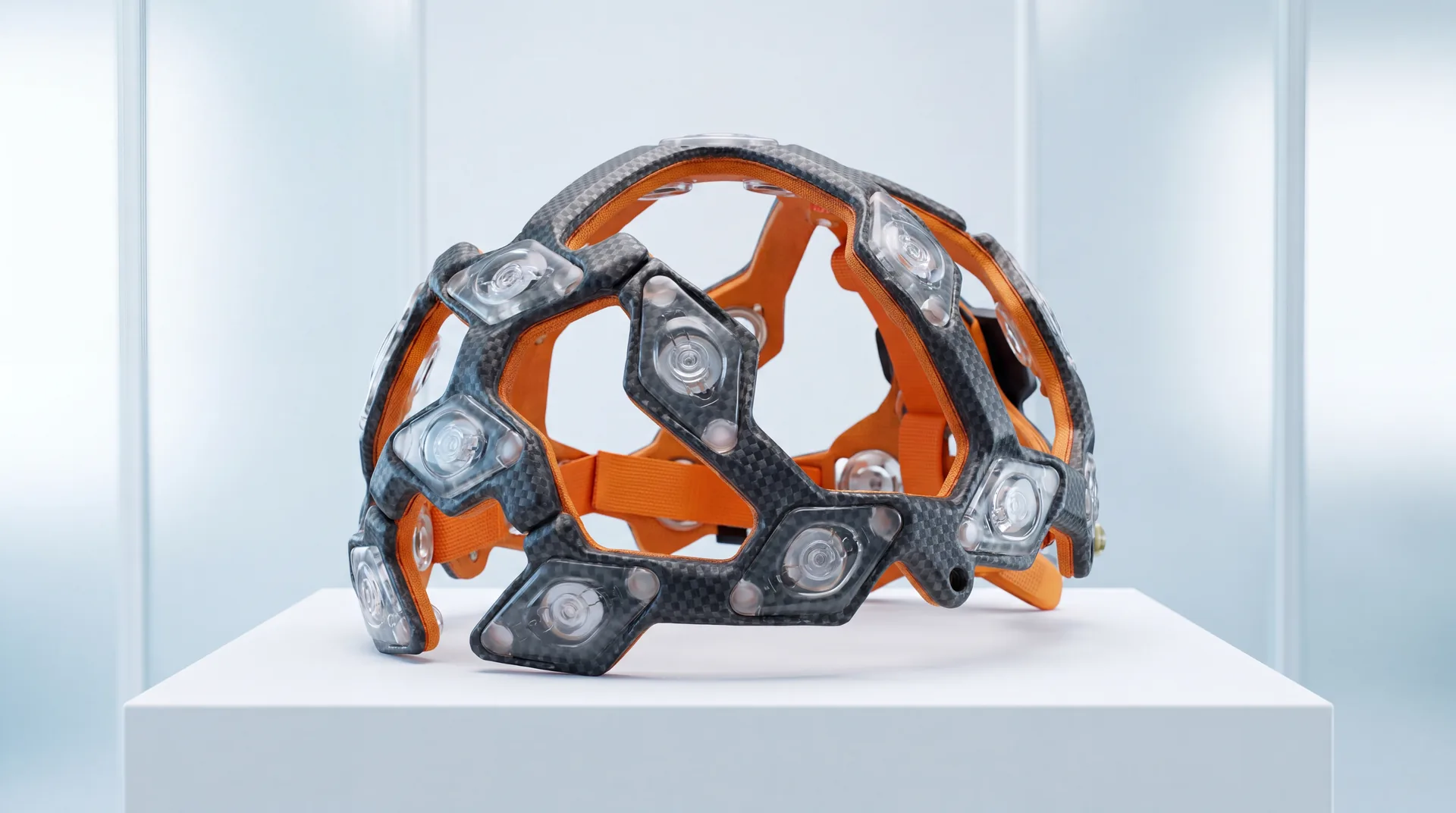
WAVi for brain function, FDA 510(k) cleared (K213900) to aid in diagnosis, not to diagnose any condition on its own, about twenty minutes with the headset on. TM-Flow for autonomic, sudomotor, and ankle-brachial signals, built on three FDA 510(k)-cleared modules (K173696, K152216, K200141), about ten minutes. The Hue Light BAHI suite sits alongside as a wellness layer under FDA General Wellness, cash pay.

Quantified EEG and event-related potentials to track progress from baseline to retest across the rehabilitation program. A quantified measure of change where subjective reporting often falls short. Aid in diagnosis.

Autonomic function, sudomotor, and ankle-brachial testing to track autonomic recovery data across the rehabilitation program. Built on three FDA 510(k)-cleared modules (K173696, K152216, K200141), in one visit.
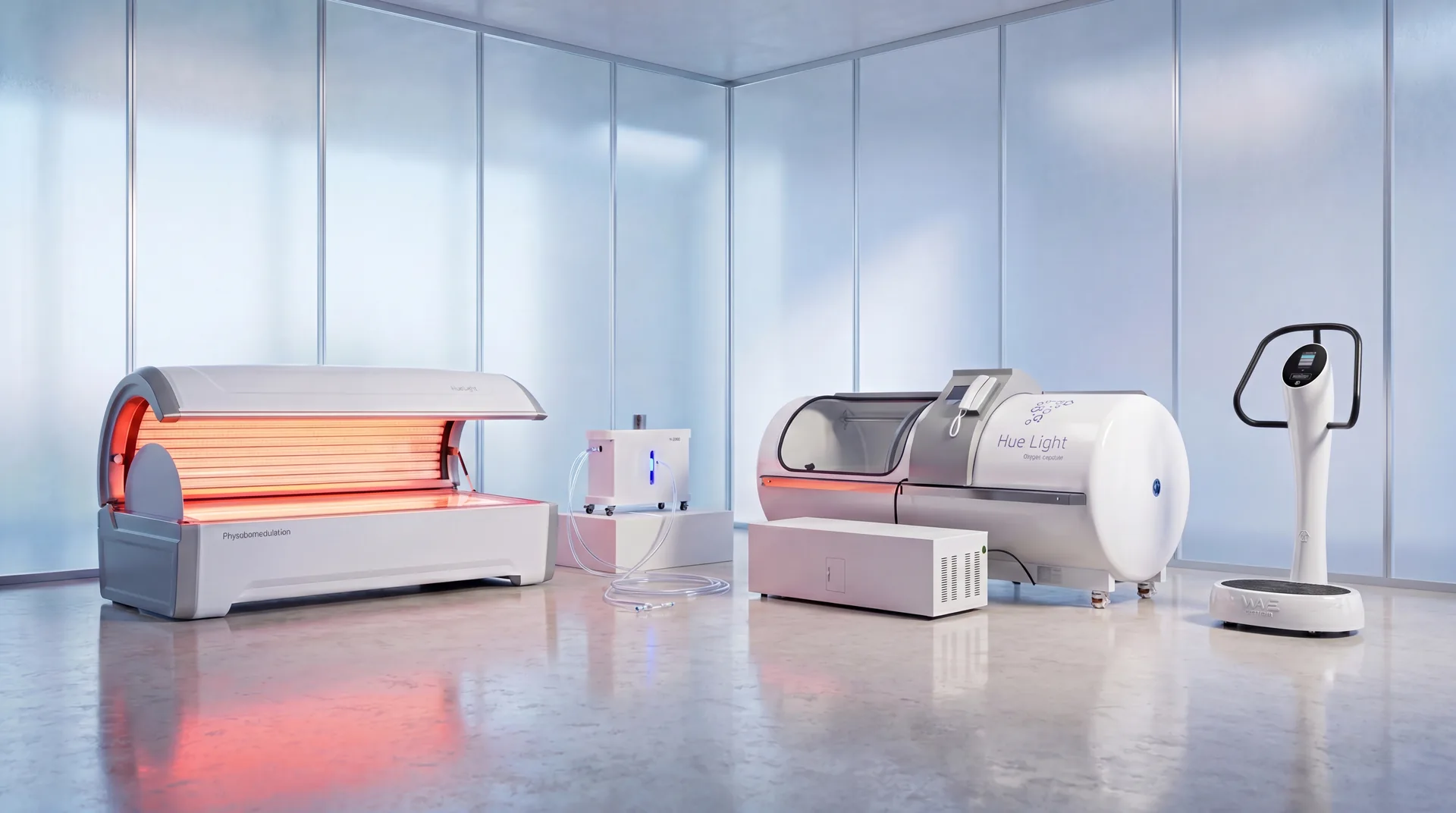
The Hue Light BAHI suite adds a cash-pay recovery layer for patients across the rehabilitation program, positioned under general wellness alongside the care plan.

Photobiomodulation, molecular hydrogen, pressurized oxygen, and whole-body vibration. A recovery layer alongside the rehabilitation program.
BMTG is TITN's interpretation arm. You order the test; a board-certified neurologist reads it and the report comes back to you. The Cognitive Function Report is your clinical track across the rehab program; Case Reviews cover the complex presentations, with you as the ordering provider throughout.
Read by a BMTG board-certified neurologist, or by your own neurologist using our templates, returned through our HIPAA portal inside 7 business days. The report does not diagnose; it documents the measured data a clinician interprets.
When a presentation crosses systems, BMTG Case Reviews add a second board-certified neurologist read on the WAVi and autonomic data, feeding both your clinical record and the report.
BMTG is TITN's interpretation arm, and the ordering provider is the customer throughout. Quantified reports aid clinical decisions; they do not replace them.
The reason clinics keep the equipment running is the wrap around it. Here is what comes with a rehab placement, and how we build the practice around it.
Live sessions, recorded walkthroughs, and interpretation guides. Your team runs real tests; a TITN clinical trainer reviews the reports with them until interpretation sticks.
The coverage checklist per device, your contractor's policy read with you, documentation templates, and your certified coder in the loop.
On-site or remote setup, calibration, and staff onboarding. A named TITN contact, not a ticket queue.
Flexible financing structures designed around your expected reimbursement timing. Multiple lender and lease pathways with transparent ROI modeling.
Workflow design, reimbursement coaching, protocol setup. Practical, billable advice.
Mobile-first WordPress sites with scheduling baked in. The same aesthetic as this one.
AI-generated brand films or full productions filmed at your clinic. Edited, scored, finished.
Local SEO, structured data, and CRM lead-intake that routes new-patient inquiries automatically.
What a rehabilitation or physical-medicine practice asks before ordering.
WAVi brain assessment and TM-Flow autonomic, sudomotor, and vascular testing. WAVi is FDA 510(k) cleared (K213900) to aid in diagnosis, not to diagnose any condition on its own; TM-Flow is built on three FDA 510(k)-cleared modules. Both are ordered when clinically indicated on the individual patient, with a board-certified neurologist report layer through BMTG. The Hue Light BAHI suite is a separate wellness offering under FDA General Wellness, cash pay.
Coverage is decided by your payer on the documented indication. WAVi is billed under the standard codes for the services performed; the physician's cognitive assessment visit is billed separately when performed. TM-Flow coding is confirmed with your own certified coder before the first claim; TITN recommends no code, and California's contractor publishes no autonomic policy. Ask us for the coverage checklist and confirm every code with your certified coder.
WAVi is used for a baseline and a retest, so the clinician can compare a patient's quantified EEG and event-related potential data against that patient's own earlier study. That tracks measured change over time. It is cleared to aid in diagnosis, which means it supports the clinician's process; it is not a standalone determination that a patient has recovered, and it does not replace symptom assessment or functional testing.
It means the device's data supports the clinician's diagnostic process rather than producing a diagnosis on its own. WAVi's cleared indication is the acquisition, display, and storage of a patient's brain electrical activity, including EEG and event-related potentials, to aid in diagnosis. The treating clinician interprets the findings in the context of the history, examination, and other testing, and makes the call.
TM-Flow captures autonomic, sudomotor, and ankle-brachial signals noninvasively in about ten minutes, which makes it repeatable across a program when serial testing is clinically indicated. It documents objective data for the chart; it is not a treatment and it does not diagnose. Heart-rate variability measurement carries known standardization limits, so findings are read as one input alongside the clinical picture.
Coverage is decided by your payer on the documented indication, and repeat or serial testing is judged the same way as the first study: on the documented medical necessity for that patient at that time. WAVi is billed under the standard codes for the services performed. Confirm every code and every repeat interval with your own certified coder and payer contract.
A board-certified neurologist interprets and signs the report through BMTG, delivered to the ordering provider through a HIPAA portal, with the Cognitive Function Report inside 7 business days. The in-office device captures the data; it does not generate the clinical interpretation. Credentials, including board certification and license number, are on file and available on request.
No. The four Hue Light BAHI devices, photobiomodulation, molecular hydrogen, hyperbaric, and whole-body vibration, are positioned under the FDA General Wellness policy for low-risk products. They are not FDA cleared, they are cash pay, and they are not for the diagnosis, treatment, cure, or prevention of any disease. They sit alongside the care plan as a wellness layer, not as therapy for a named condition.
A short call covers devices, reimbursement, and onboarding for your workflow. No commitment beyond the first conversation.
Roberto or Weston takes the call personally. We walk you through WAVi, TM-Flow, the report layer, and the billing path for rehab.
Pick a time →A de-identified, watermarked sample of the neurologist-read cognitive report your practice would receive.
Open the sample →FDA 510(k) clearances verified in the openFDA device database. Coverage policies are read in the CMS Medicare Coverage Database. Coverage and payment are decided by each payer on the documented indication; nothing on this site is a guarantee of payment.